02. 8:33 is Bending Genres Like It Owes Them Money | Take
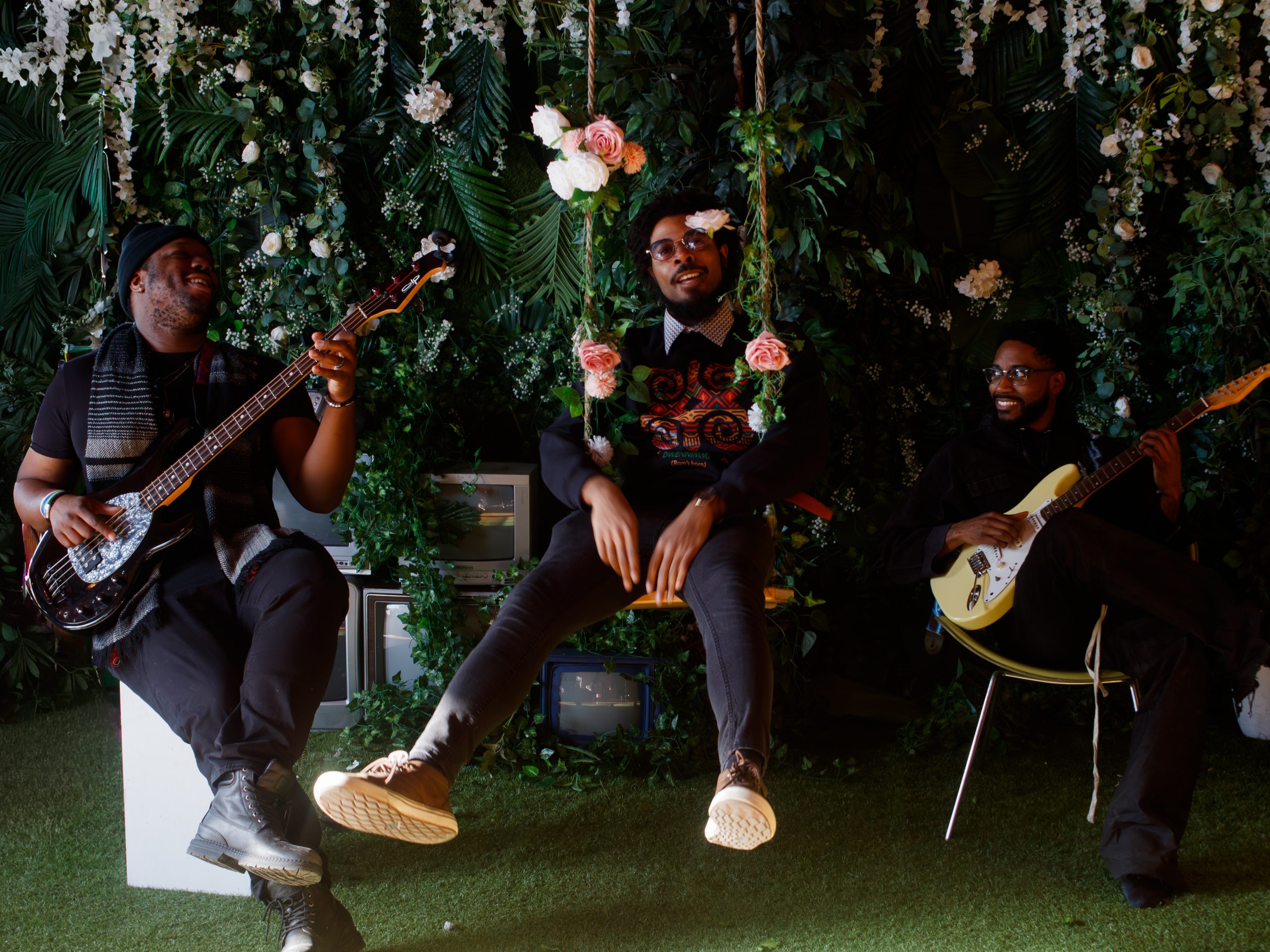
8:33 is what happens when Chicago remembers it can be weird, smooth, and loud at the same time. Think R&B that doesn’t sit still, mixed with hip-hop that gets experimental without ever losing the beat. If Steve Lacy, Tyler, the Creator, and Outkast somehow had a baby, yeah it’d sound like this. Messy in the right ways, catchy in the dangerous ones.
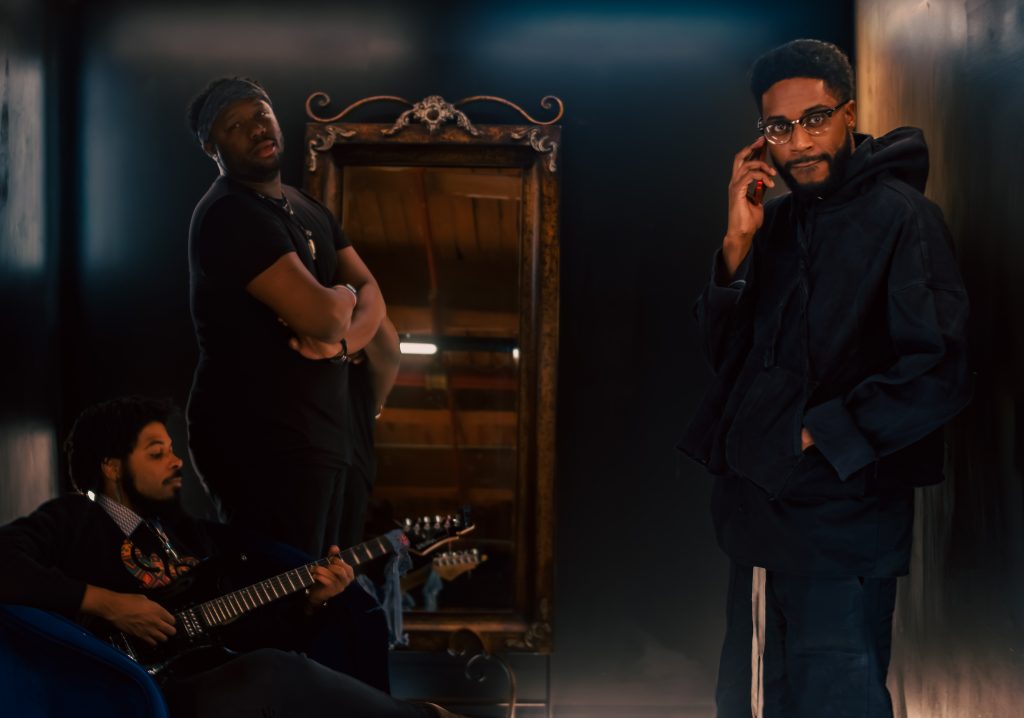
Xay raps and plays guitar like he’s casually bending reality, James Vaan leads vocals while effortlessly switching instruments, and Mikèmike hops between singing and managing like it’s no big deal. At a show, you can literally see them trading instruments mid-set. Chaos in action, but somehow perfectly controlled.
They’ve been quiet for a bit while back in the lab working on new music, but one thing is clear: they’re not interested in chasing whatever “safe” Chicago sound is hot this month. 8:33 is doing their own thing. Pay attention now before you have to pretend you liked them “before they blew up.”
We sat down with the band to talk about creative chaos, rejecting the label of being “too much,” and what’s next as they prepare their upcoming album, So Late, You’re Early.
Kena Bilbrew: Okay. So, when y’all are getting all the creative juices flowing—in the studio, in the car, at home—what comes first? Y’all hearing a melody? Thinking about lyrics? Does it hit all at once or are y’all bobbing along like, “Hold on, wait a minute now, I like that flow”? How y’all do it?
James Vaan: Why don’t you go ahead and let the folks at home know what’s going on with 8:33?
Xay: It is nothing but pure unadulterated autism. Yeah. It’s so random. I think that’s the fun of it—because it comes in so many different ways. Sometimes, for me, it starts off as a melody. But honestly, it comes in totally different ways. A few times I’ll be like Frankenstein in the lab: I’ll do something on one song, not like it, then bring it to another song and it works. So it’s about being open to whatever comes, whether it’s lyrics first or melody first. A lot of the time, I try to start on guitar—that’s where I came from. But sometimes it starts with drums, sometimes bass, sometimes a melody JV is singing in the background. Lyrics usually come last. If they show up in the beginning, it’s more like a phrase or melody that I build around.
Mikèmike: That’s pretty much it. That’s the writer right there. That’s our answer.
Xay: And if it sounds hot, cool. If it doesn’t, they tell me, “Yo, this is garbage.” Then I just save it for later.
KB: Well, you know, nowadays a lot of people think artists are “too much” in some way—too weird, too strange, too loud, whatever. How do y’all lean into that “too much” as a superpower?
Mike: Well, the yin and yang is definitely represented within this brand we have. There are multiple personalities. When things are at 100, something else has to be at zero. When things are at 75, something else has to be at 25. We balance ourselves. Other people—I don’t know what they’re doing out there, to be honest.
JV: And other people are in their own world, their own version of what it means to be an artist. Everybody’s got their own path, their own goals, their own present, their own future. It’s hard to compare even if they’re in the same genre, because they’re probably talking about different things. Still the same world of artistry, just on a different page.
Xay: I’m sorry, what was the question?
KB: I said people say artists are too much. How do you lean into that and make it a superpower?
Xay: Because being too much is great. People who say that usually mean the stunts and publicity instead of the music itself. For us, it’s always music first. Never the other bells, whistles, or flares. If the music’s not good, then nine times out of ten, we’re not good.
Mike: We’re in a “too much” world. We’re in a “too much” society. There’s crowding. So when people are doing what they’re doing, they’re just trying to be noticed, get attention, put themselves out there.
KB: So, out of all the songs y’all have done, which one are you most fond of?
JV: Personally, I don’t think we’d come to the same answer. But I’d say No Debbie Downers. It started with Xay’s solo project—the first project any of us had ever worked on in a studio. Going from a beat and then having four or five other people create a similar sound to the original beat —it was something different. The process felt fluid. We didn’t take long to figure out how to rewrite it as a band versus just Xay on his own.
Xay: I’ve got two tracks—one released, one unreleased. The released one I’d say is Prototype. I think it’s always cool when you can make someone else’s song your own, and we definitely did that. Honestly, I listen to our version more than the original. If people don’t know Outkast, they think that’s our song—which I think is impressive. The unreleased one is Swoon. It maps the new era of 8:33, and it’s some of my best guitar work to date.
Mike: I wouldn’t say a single song, but a single project: Wave One Transmission. It started a series for us. The idea was just us doing what we always do—off the top, freestyle, make it sound good. Columbia College Chicago has a music program where student engineers record bands. They call us every year. One time we went in with nothing prepared. JB started playing, I came in with something, Xay hopped on the mic freestyling. The whole project was that Columbia session—just us spit balling. I still get goosebumps hearing it.
JV: For those who haven’t heard it, the project is like flipping through radio stations, with static and transitions between grooves. We just did four different grooves, played them for a minute and change each, then built from there. It felt free because the whole session was free.
Xay: Small tracks? Man, those were bangers.
KB: Next one’s a two-parter. How do you balance making music that sells versus music you love? And have y’all ever felt pressured to look or sound more marketable? Xay: Yes to it all. We are selling out, folks. It’s getting hard.
KB: Okay, but seriously—how do you balance making music for the people versus making what you love, even if it’s not popular right now?
Xay: Honestly, it leans more toward the latter. It’s ego. I think everything we make sounds fire. But also, our stuff is timeless because it’s not tied to a wave or trend. It’s not influenced by what’s pop, hip-hop, rap, or R&B right now. So it has a timeless feel—like how you can still play a Justin Timberlake song from 2003 and it still smacks.
KB: So, what would y’all say to an emerging artist who doesn’t fit the mold?
JV: Be yourself always. Don’t let anybody tell you what you should be doing. If you only do what everybody else is doing, how do you expect to get noticed? There are thousands of others doing the same thing. You’ve got to focus on showing who you are. That’s the difference maker.
Mike: I’d backtrack. Do you even really want to be an artist today?
Xay: I’d tell an emerging artist: find a purpose, find a team, and have fun with it. You’ve got to have a team. You’ve got to be able to have fun even when it’s not fun. And you’ve got to have a purpose. Are you making fun music, real music, hot music, bops? Find your purpose and follow it. If your purpose is selling out, that’s fine. We need industry plants and one-hit wonders, just like we need timeless artists. Everything has a place.
Mike: All right. New 8:33 album coming out 2026. You heard it here first.
Xay: The title is So Late, You’re Early. Follow us everywhere: 833Chicagotime. Check us out on Spotify, YouTube, Apple, and Snapchat.
Live music in Chicago doesn’t fit neatly into a single category, and neither does 8:33. Capturing them live isn’t just about documenting a setlist; it’s about catching the brief moments between instrument switches, the electric split-second decisions made on stage, and the raw energy of a crowd realizing they are witnessing something rare.
This feature marks a shift for us—moving beyond standard coverage to bring you directly into the room with the artists pushing Chicago’s sound forward without permission.
End of Take 02. Photo by Rose. Interview by Kena Bilbrew- R
Chicago band looking for press shots? Contact me